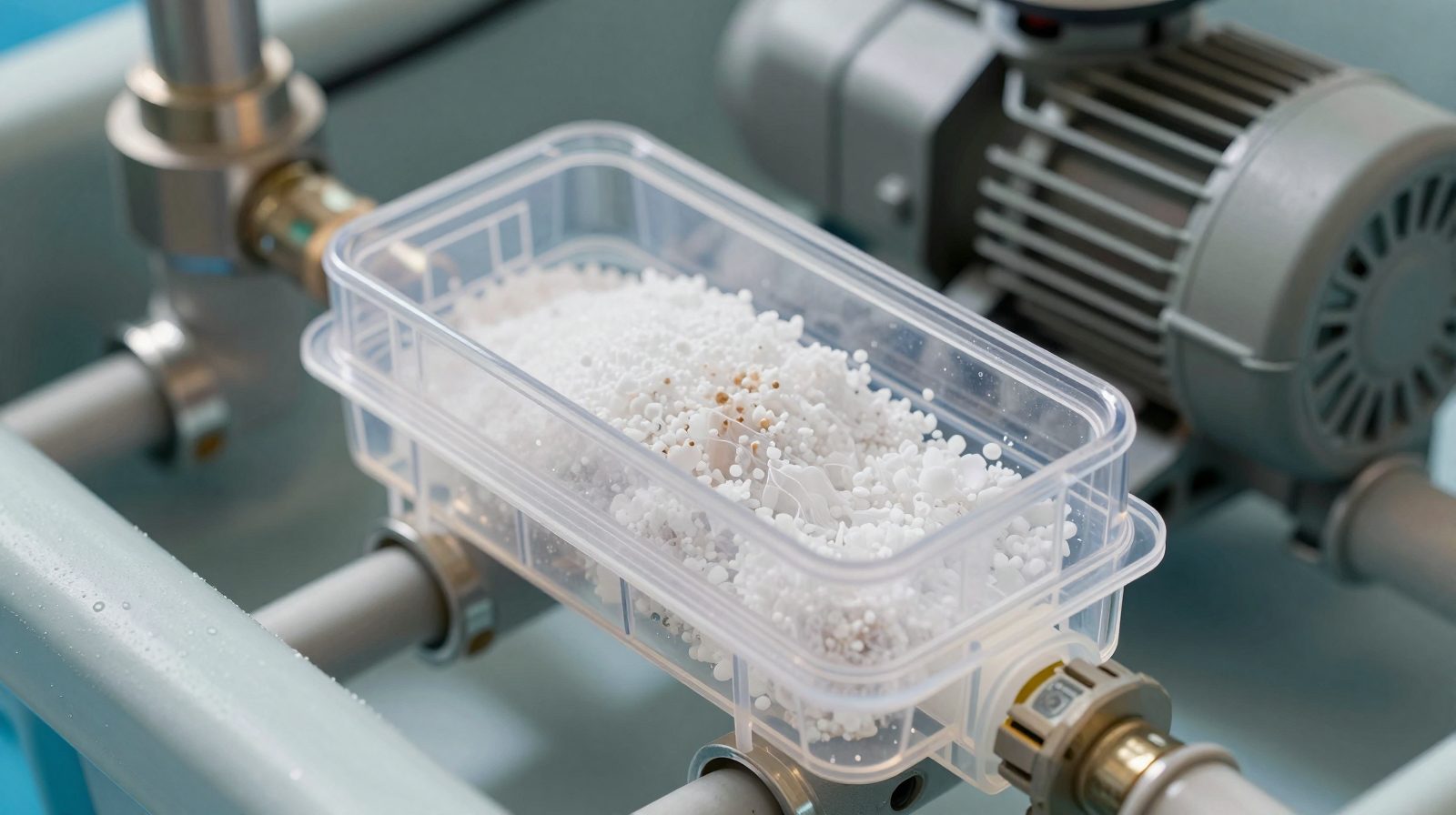
Illustration.
How it works
HealthyWA describes salt water chlorination as the most common way home pools in WA are disinfected: an electric current through salty water, via electrodes in the cell, makes chlorine. In heavy use or hot weather a domestic chlorinator may not make enough, and the water can turn milky; then you add chlorine by hand to catch up.
How much salt
Every chlorinator has its own target salt range, printed in its manual and often on the unit. Test the salt, then add the difference: 1 mg/L is 1 gram per 1,000 litres, so lifting a 50,000 L pool by 1,000 mg/L takes 50 kg of pool salt. Calculate yours. Add it in the shallow end with the pump running and brush until it dissolves.
Cleaning the cell
White scale builds up on the electrodes, especially with high calcium, and cuts how much chlorine the cell makes. Many newer units self-clean; others need cleaning by hand as the maker directs, usually by soaking the cell in a weak acid solution made up exactly as the manual says. Wear eye protection and gloves, and always add acid to water.
Safety. Follow the product label. Add chemicals to water, never water to chemicals. Never mix chlorine and acid. Keep children and pets away and never add chemicals while anyone is in the pool. Wait at least 30 minutes, or longer when the product label requires it; retest and meet its reopening conditions before anyone swims.

Rain dilutes salt. After a big downpour, retest the salt before your chlorinator starts warning you.
Common questions
How much salt should be in my pool?
Whatever your chlorinator's manual specifies; ranges differ by model.
How do I clean a salt chlorinator cell?
As your maker directs: usually a soak in weak acid solution until the scale dissolves, then a rinse. Many cells self-clean.
Why is my salt pool cloudy?
Often the chlorinator is not making enough chlorine for the load. Add chlorine by hand, check the cell for scale, and run the pump longer.