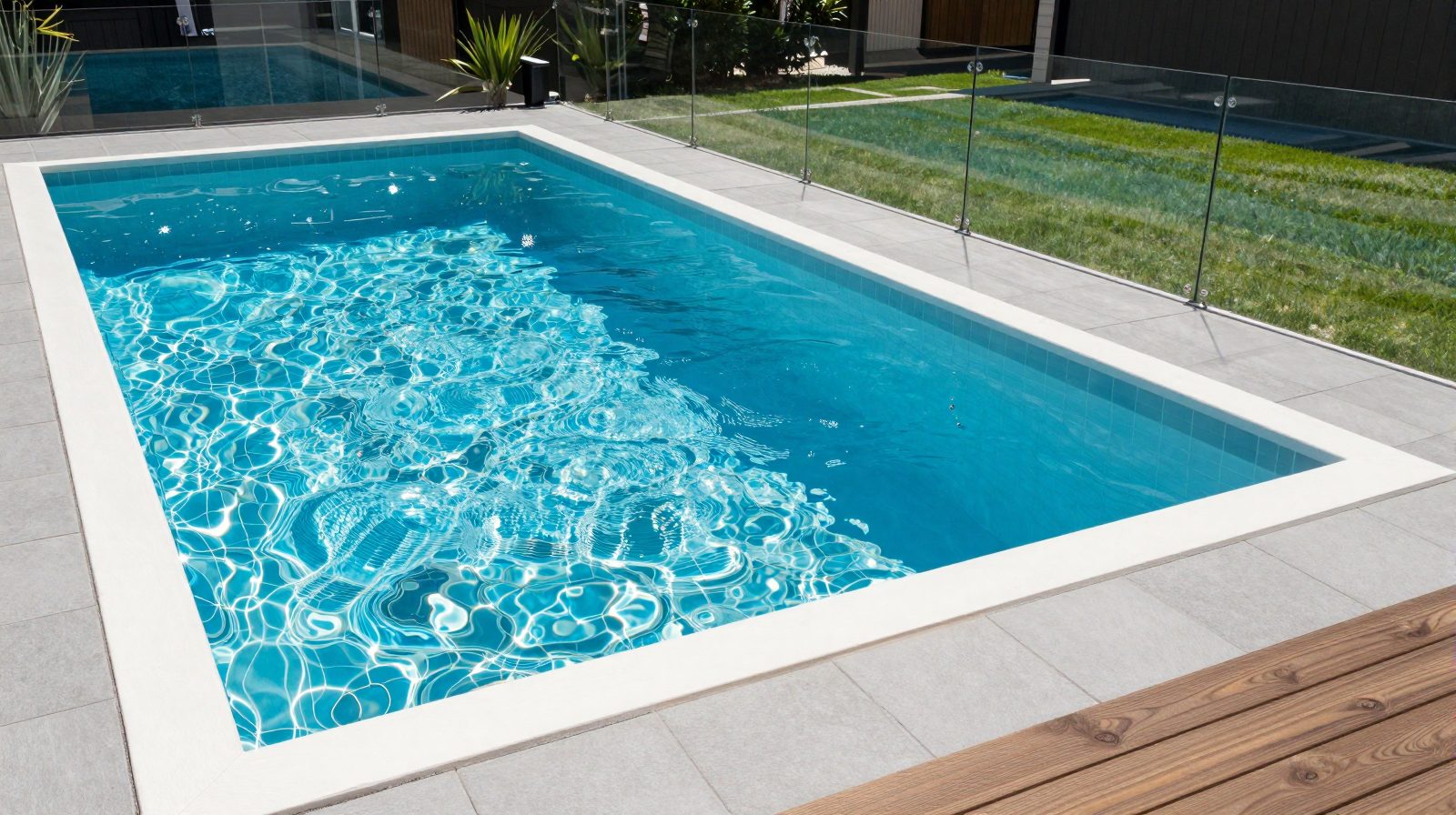
Illustration.
How a magnesium pool works
A mineral pool is a chlorinated pool. Instead of plain pool salt (sodium chloride), you add a mineral blend, and the chlorinator makes chlorine from it the same way a salt chlorinator does. Zodiac, for example, describes its MagnaPool minerals as about 30% magnesium chloride and 70% potassium chloride, with no added sodium, used with its own chlorinator and glass filter media. Because magnesium chloride does not add the same salinity as salt, Zodiac's rule of thumb is that seven bags of its minerals equal five bags of salt.
Compared
| Liquid chlorine | Salt chlorinator | Magnesium (mineral) system | |
|---|---|---|---|
| How chlorine gets in | You pour it in | Made from salt by the cell | Made from the mineral blend by the cell |
| Equipment | None extra | Salt chlorinator | A chlorinator suited to minerals; some systems specify their own filter media |
| Ongoing purchase | Liquid chlorine, often weekly | Pool salt, topped up | Mineral blend, topped up (more kilograms than salt for the same salinity) |
| Upkeep | Frequent dosing | Clean the cell, check salt | Clean the cell, check mineral level |
All three still need the same pH, chlorine and stabiliser checks.
The health claims
Mineral pools are often marketed with claims about skin, relaxation and muscle recovery. We do not repeat them: we have not found good evidence that soaking in a pool at these mineral levels does any of these things, and nothing here is health advice. What can be said plainly is that the water feels different to some people, and that a mineral pool is still a chlorinated pool.

If you switch an existing salt pool to minerals, check that your chlorinator is rated for them first. Ask the maker or your pool technician.
What the evidence says about benefits
Mineral pool brands often describe the water as softer, gentler on skin and eyes, and relaxing, and some point to the reputation of magnesium-rich mineral springs. Many swimmers do report that mineral pools feel different. What is harder to find is strong scientific evidence that the small amounts of magnesium in a pool are absorbed through the skin in a way that improves health. Treat health claims with caution, and choose a mineral pool if you prefer how it feels, not as a medical treatment. The water still needs the same chlorine level as any other pool to keep it safe.
Converting a salt pool to magnesium
Many salt chlorinators can run on a mineral blend, but not all, and some mineral systems specify their own chlorinator or filter media. To convert, you usually let the salt level fall through normal backwashing and rain, or partly drain and refill, then add the mineral blend to the level the chlorinator needs. Check with the chlorinator's maker and the mineral supplier first, and ask a pool shop to test the water before and after. Do not simply add minerals on top of a high salt level.
Running costs compared
The equipment and electricity costs of a mineral pool are much the same as a salt pool, because both use a chlorinator. The difference is the mineral blend, which costs more per kilogram than plain pool salt, and you add it when starting up and to replace what is lost through backwashing, splash-out and rain dilution. A cartridge filter, which does not backwash, loses less. Ask suppliers for the cost of the blend and how much your pool needs.
Caring for a mineral pool
Test and balance the water just as you would any chlorinated pool: free chlorine, pH, total alkalinity, calcium hardness and stabiliser if outdoors. Keep the mineral level in the range the chlorinator needs. Clean the cell when scale builds up. Some owners find pH drifts less in a mineral pool; others see no difference. Keep a record of readings to learn how your pool behaves.
Who a mineral pool suits
Mineral pools suit owners who like the feel of the water and are happy to pay a little more for the mineral blend. They need the same testing and care as a salt pool.
Our short answer
A magnesium pool is a chlorinated pool with a mineral blend instead of plain salt. It feels softer to many swimmers and costs a little more to run.
Mineral levels
Each mineral system has its own target level, printed on the chlorinator or the blend's packaging; test with a salt meter suited to the minerals.
Mineral pools and pH
Test pH as in any pool; mineral pools still drift.
Common questions
What is a magnesium pool good for?
It is a way of running a chlorinated pool with less or no sodium salt. Health benefits claimed in marketing are not something we can confirm.
What are the disadvantages of a magnesium pool?
The minerals cost more per bag than salt and you need more kilograms for the same salinity; some systems need specific equipment.
Do you put salt in a magnesium pool?
Some systems use only the mineral blend; others mix minerals and salt. Follow your chlorinator maker's instructions.
Do you need to shower after a magnesium pool?
As with any chlorinated pool, rinsing off afterwards is a sensible habit.