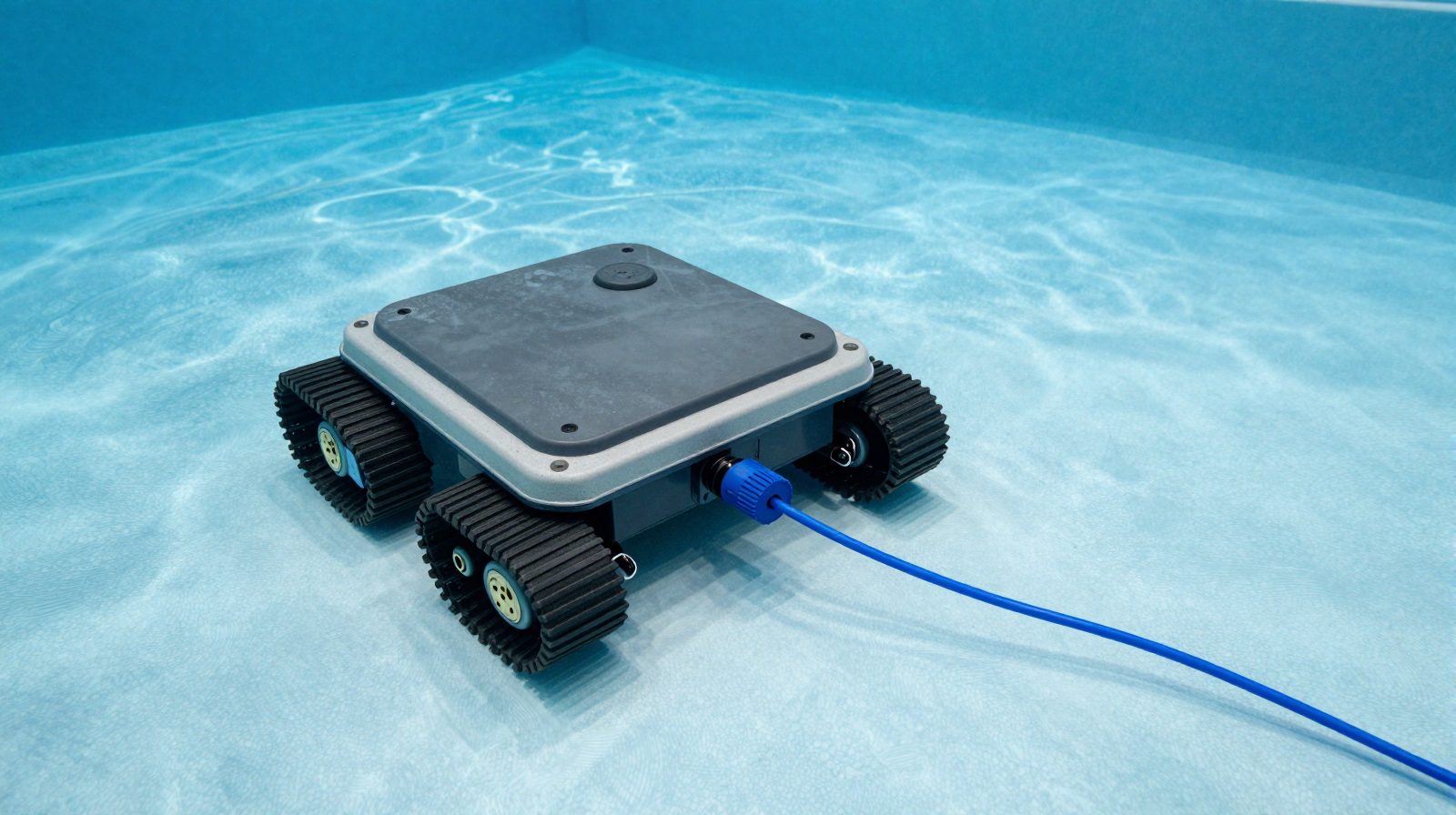
Illustration.
Compared
| Suction cleaner | Robotic cleaner | |
|---|---|---|
| Power | Your pool pump's suction, through the skimmer or a vacuum point | Its own low-voltage motor and power supply |
| Where debris goes | Your skimmer basket and filter | Its own filter bag or canister |
| Running cost | Needs the main pump running | Its own power supply, independent of the pump |
| Walls and steps | Mostly floor; some climb walls | Many climb walls and scrub the waterline |
| Upkeep | Hoses, diaphragms and parts wear | Empty the bag after each run; motors and tracks wear |
| Buying cost | Lower | Higher |
How to choose
- Lots of leaves? A robotic cleaner's bag keeps leaves out of your filter.
- Want the lowest buying cost? A suction cleaner.
- Want walls and the waterline scrubbed? Most robotic cleaners do it.
- Running costs matter? The SA Government notes a pool typically uses 2,000 to 3,000 kWh of electricity a year, mostly the pump, so a cleaner that needs the pump running adds to that.

Maple's tip
Whatever cleaner you use, still brush the steps and corners by hand once a week. Algae starts where cleaners do not reach.
Common questions
Is a robotic pool cleaner worth it?
For pools with lots of leaves or where you want walls scrubbed, many owners find it is. It costs more to buy.
Do robotic pool cleaners need the pump running?
No. They run on their own power supply and filter.