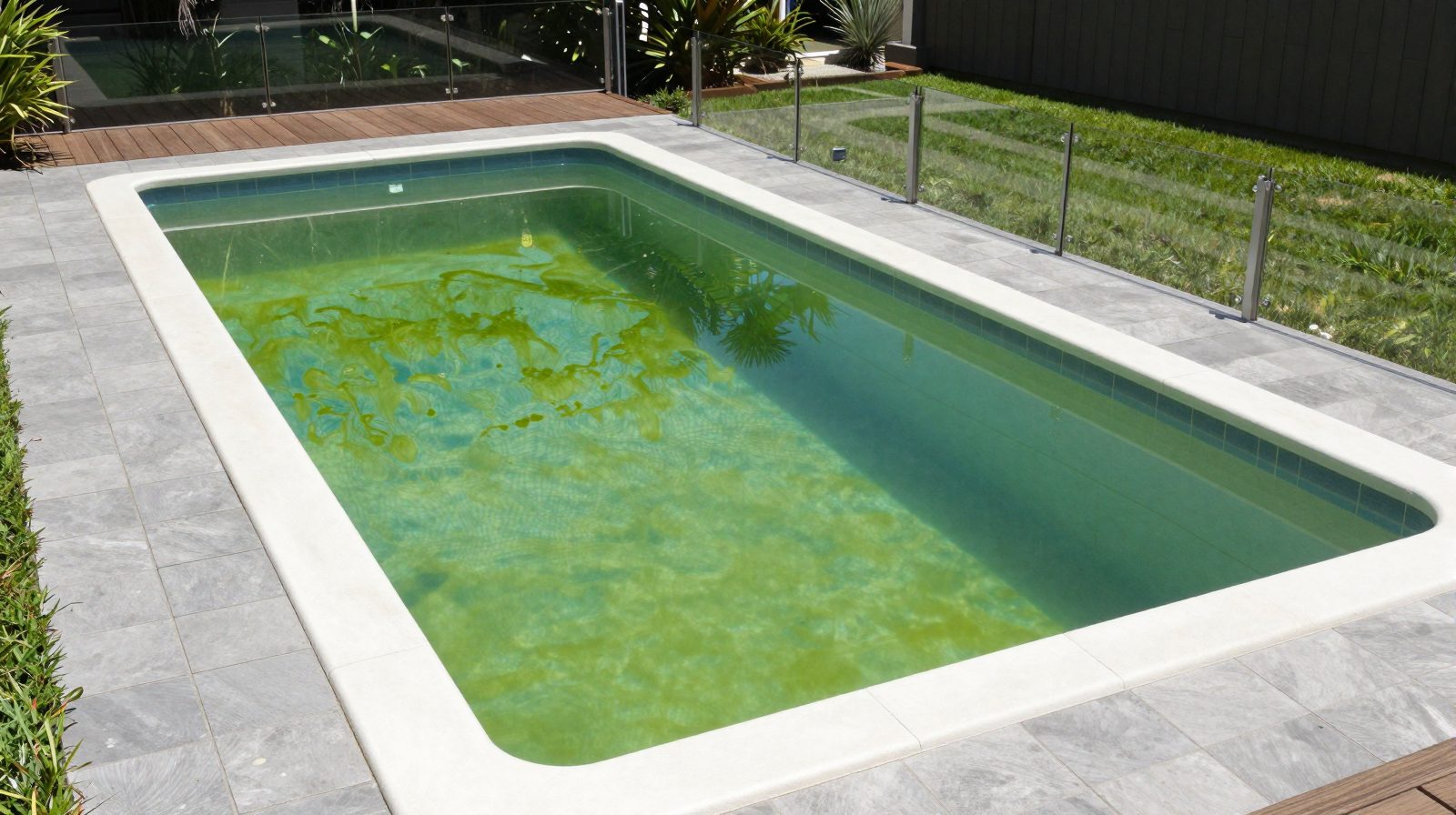
Illustration: the same pool, green.
Why it turned green
Algae are single-celled organisms that, as HealthyWA puts it, grow quickly in sunny and warm conditions and can turn a pool green within a few hours. They take hold when free chlorine drops too low, which happens with hot weather, heavy use, rain, a pump that has not run long enough, or a chlorinator that cannot keep up.
Step by step
- Test and fix pH to 7.2 to 7.8, so the chlorine works. pH
- Shock with chlorine. Raise free chlorine well above the normal level, following the product's shock dose for your litres. Calculator
- Brush every surface. Algae cling to walls and steps.
- Run the filter continuously and clean it as it clogs.
- Vacuum the dead algae. HealthyWA advises brushing, then vacuuming the settled algae from the floor the next day rather than trying to remove it through the filter.
- Retest chlorine, pH, alkalinity and calcium before anyone swims.
Safety. Follow the product label. Add chemicals to water, never water to chemicals. Never mix chlorine and acid. Keep children and pets away and never add chemicals while anyone is in the pool. Wait at least 30 minutes, or longer when the product label requires it; retest and meet its reopening conditions before anyone swims.

Ask your water supplier or a pool technician about phosphates if your pool keeps going green. HealthyWA mentions phosphorus in the supply as something a technician can check.
Common questions
How long does it take to fix a green pool?
Usually a few days: a day or two for the shock and filtering to clear the green, then vacuuming and rebalancing.
Why is my pool green but the chlorine is high?
The algae may be dead but still in the water, the pH may be too high for the chlorine to work, or the stabiliser may be very high. Test pH and stabiliser, and keep filtering and vacuuming.
Can you swim in a green pool?
No. Wait until the water is clear and the chemistry is back in range.