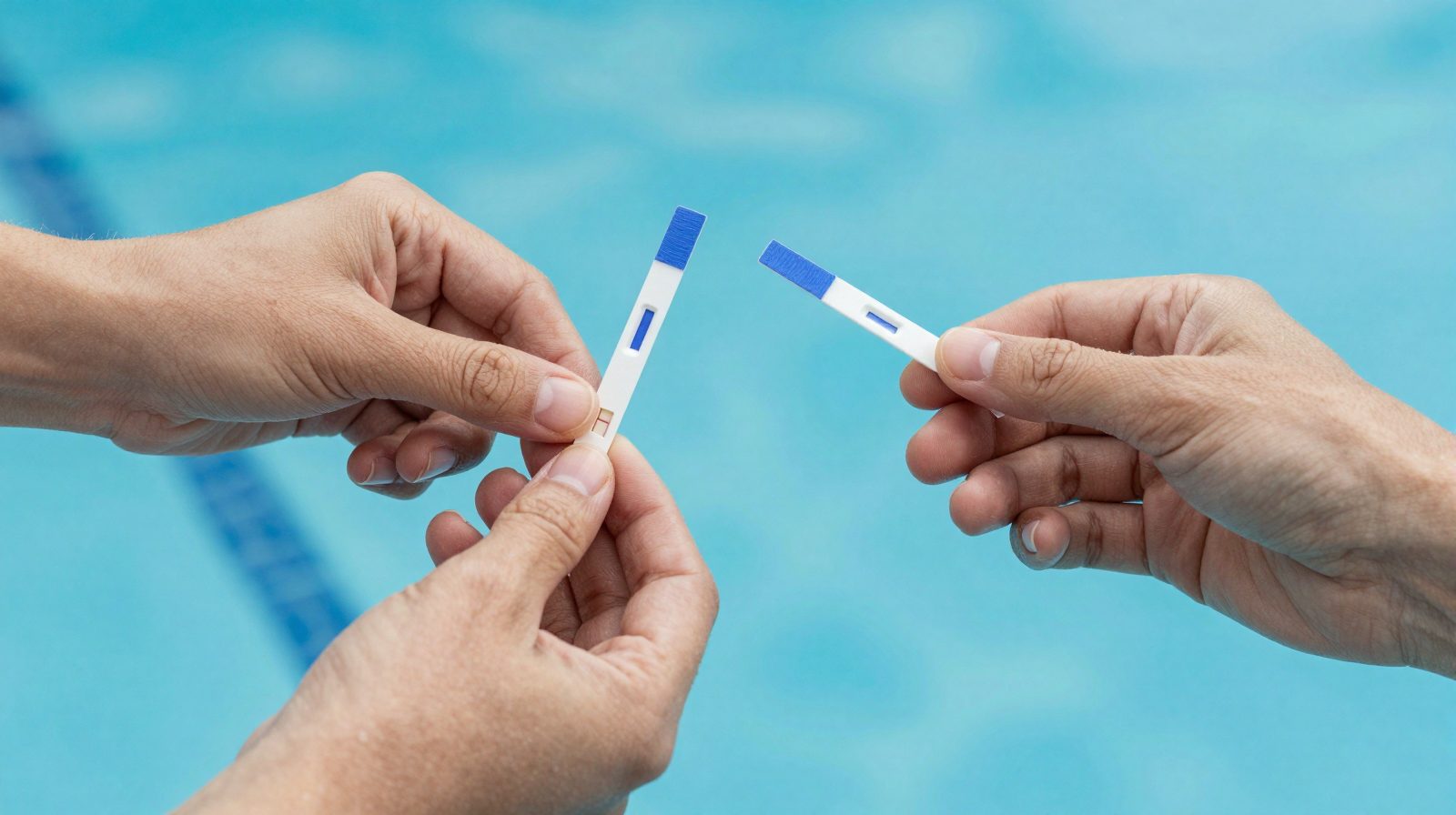
Illustration.
Why pH matters
HealthyWA explains that chlorine works best when pH is between 7.2 and 7.8, with 7.5 ideal for swimmers. Above that range chlorine loses strength and calcium can cloud the water or scale surfaces; below it the water can sting eyes and corrode metal fittings. Heavy rain, lots of swimmers and the chemicals you add all move pH.
To lower pH (most common)
- Test and note the reading.
- Add pool acid (hydrochloric acid, or the dry acid sodium bisulphate) in a small dose, following the label for your litres. With the pump running, pour it slowly into the deep end, away from the skimmer.
- Wait a few hours with the pump running, then retest. Repeat in small steps rather than one big dose.
Salt pools tend to drift up in pH, so regular small acid doses are normal.
To raise pH
Add soda ash (sodium carbonate) as the label directs, pre-dissolved in a bucket of pool water, then retest. If total alkalinity is also low, sodium bicarbonate (buffer) raises alkalinity with a smaller effect on pH.
Safety. Follow the product label. Add chemicals to water, never water to chemicals. Never mix chlorine and acid. Keep children and pets away and never add chemicals while anyone is in the pool. Wait at least 30 minutes, or longer when the product label requires it; retest and meet its reopening conditions before anyone swims.

Never add acid and chlorine at the same time or into the same bucket. Add one, let the pump run, and add the other later.
Common questions
What should the pH of my pool be?
7.2 to 7.8, with 7.5 ideal, according to HealthyWA.
What raises pH in a pool?
Soda ash (sodium carbonate). Sodium bicarbonate raises total alkalinity, with a smaller effect on pH.
How do I lower the pH in my pool?
With pool acid (hydrochloric acid or sodium bisulphate), in small doses with the pump running, retesting between doses.
Why does my pool's pH keep rising?
Salt chlorinators and fresh plaster push pH up over time. Small regular acid doses keep it in range.