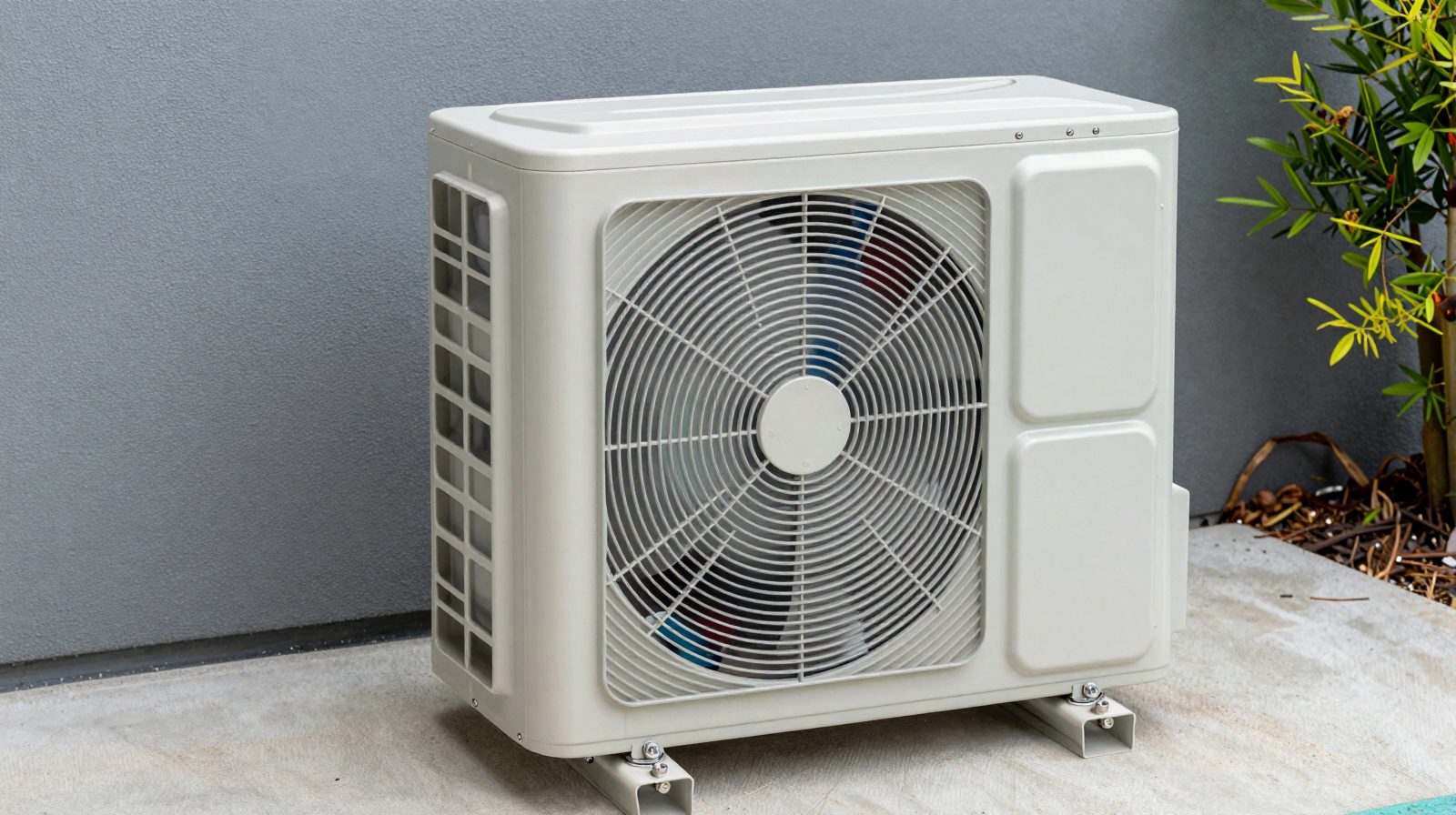
Illustration.
The three options
| Solar | Heat pump | Gas | |
|---|---|---|---|
| How it heats | Pool water is pumped through collectors on the roof | Extracts heat from the air with a compressor, like a reverse-cycle air conditioner | Burns natural gas or LPG |
| Running cost | Lowest: only the pump | Electricity; several units of heat for each unit of power | Highest per hour of heating |
| Works when | Sunny days; less in winter | Most weather, slower when the air is cold | Any time, heats fastest |
| Installation | Roof collectors and plumbing | An outdoor unit, plumbing and usually its own electrical circuit | A gas line and flue |
Start with a cover
Most of a pool's heat is lost from the surface. HealthyWA notes an uncovered 8 by 4 metre pool can lose around 15 mm of water a day to evaporation, and evaporation carries heat with it. A cover on a heated pool cuts both, so it is the first thing to buy whichever heater you choose.
Who installs them
Heat pumps usually need their own electrical circuit, which must be installed by a licensed electrician, and plumbing by a pool technician or plumber. Gas heaters must be connected by a licensed gas fitter. Solar collectors go on the roof with plumbing to the pool equipment.
Running cost drivers
How warm you want the water, how many months you heat it, whether you use a cover, your local climate, and your electricity or gas price. The SA Government notes a pool typically uses 2,000 to 3,000 kWh of electricity a year before heating, depending on the pump and how long it runs.

Heat pumps work best on the warmest part of the day. If you have solar panels, set the heat pump to run when they are producing.
Solar pool heating in more detail
Solar pool heating pumps pool water up through black collector panels or tubes on the roof, where the sun warms it, and back into the pool. A controller with sensors on the roof and in the pool turns the solar pump on only when the roof is warmer than the water. Running costs are low because the only power used is the pump, but heating depends on the weather: solar works best from spring to autumn and adds less in a cold, cloudy winter. The size of the collector area matters most; a common guide is a collector area at least half to all of the pool's surface area, depending on the roof's direction and the season you want to extend. North-facing roofs suit solar best in Australia.
Heat pumps in more detail
A pool heat pump works like a reverse-cycle air conditioner in reverse: it draws heat from the outside air and transfers it to the pool water. For each unit of electricity it uses, it delivers several units of heat, which makes it far cheaper to run than electric resistance heating. Heat pumps heat steadily in most weather but slow down as the air gets colder. They suit owners who want to extend the season reliably and can run them during cheap or solar hours. Size matters: an undersized heat pump struggles to keep up in cool weather, so match it to the pool's volume, the target temperature and the local climate, as the maker's sizing guide shows.
Gas heating in more detail
Gas heaters burn natural gas or LPG to heat water quickly, regardless of the weather. They suit pools and spas heated occasionally, for a weekend or a party, because they reach temperature fast. Running costs per hour are the highest of the three, especially on LPG, so gas is usually a poor choice for keeping a pool warm all season. Gas heaters need a licensed gas fitter, a suitable gas supply and safe flue clearances.
What drives the running cost
- The temperature gap: heating a pool to 28 degrees in a cool month costs far more than taking the chill off in late spring.
- The pool's size and surface area: more water and more surface lose more heat.
- Evaporation: the biggest heat loss; a cover cuts it dramatically.
- Wind and shade: exposed, shaded pools lose more heat.
- The heater's efficiency and size.
- The energy price: electricity tariff, gas price, or free solar power.
Pool covers do most of the work
Because most heat loss is from the surface, a cover is the cheapest heating upgrade. Bubble (solar) covers trap heat and add some from sunlight; thermal covers insulate better; liquid covers form a thin film that reduces evaporation. Put the cover on whenever the pool is not in use, especially overnight, and a heated pool will need far less energy to stay warm. Covers also save water and chemicals.
Which option suits you
| If you want | Consider |
|---|---|
| A longer swimming season at low running cost | Solar, plus a cover |
| A warm pool most of the year, reliably | Heat pump, plus a cover |
| Fast heating for occasional use, or a spa | Gas |
| The cheapest improvement first | A pool cover |
Many pools combine solar for most of the season with a heat pump or gas for cooler weeks.
Questions to ask an installer
- What size heater or collector area does my pool need for the season I want?
- What will it cost to run per month at my target temperature?
- Where will the unit, panels and pipes go, and does it need a new electrical circuit or gas line?
- What warranty applies, and who services it locally?
- Does it work with my existing pump, filter and controller?
How long it takes to heat a pool
Heating a pool from cold to a comfortable temperature takes time. A gas heater can raise the temperature of a small pool within a day, while a heat pump usually takes several days for the first heat-up and then maintains the temperature steadily. Solar heating raises the temperature gradually on sunny days and depends on the weather. A cover speeds up every option and holds the heat overnight.
Running a heated pool efficiently
- Keep a cover on whenever the pool is not in use.
- Set a sensible target temperature; each extra degree costs more.
- Run a heat pump during the warmest part of the day or on solar power.
- Shelter the pool from wind with fencing or plants.
- Keep the filter clean so water flows freely through the heater.
- Have the heater serviced as the maker recommends.
Heating a spa
Spas are small and are usually heated to a much higher temperature than pools, often only when used. Gas heaters and dedicated spa heaters suit this pattern. If the spa shares water with the pool, heating the spa alone requires valves that separate the two.
Our short answer
Start with a cover. For a longer season at low cost, choose solar. For reliable warmth most of the year, a heat pump. For fast heating now and then, gas.
Heating and pool chemistry
Warmer water uses chlorine faster and encourages algae, so a heated pool needs more frequent testing and often a higher chlorine output. Heaters can also be damaged by water that is out of balance: low pH corrodes heat exchangers, high pH and calcium scale them. Keep the water balanced and follow the heater maker's water chemistry limits to protect it.
Heaters and the pump
Every heater needs water flowing through it, so it only works while the pump runs. If you heat the pool, the pump may need to run longer, which adds to power costs. A variable speed pump at low speed for longer hours often suits heat pumps and solar well.
Heater lifespan and servicing
Heat pumps and gas heaters last many years with regular servicing, while solar collectors can last a long time with occasional checks for leaks and damage. Have heaters checked as the maker recommends, keep the area around a heat pump clear for airflow, and keep leaves off solar collectors.
Heating costs and the season
Heating a pool to extend spring and autumn costs far less than heating it through winter, because the gap between the air and water temperatures is smaller. Many owners heat for the shoulder seasons only, which gives several extra months of swimming at a moderate cost, especially with a cover.
Comparing quotes
When comparing heater quotes, ask each installer for the heater's output, its efficiency at your expected air temperatures, the estimated monthly running cost at your target temperature, the installation work included, and the warranty. A cheaper unit that is too small can cost more to run and never reach the temperature you want.
Common questions
What is the cheapest way to heat a pool?
Solar is cheapest to run, because the sun does the heating and you only pay to pump the water. A cover makes any heater cheaper.
How much does it cost to heat a pool with a heat pump?
It depends on the size of the pool, the temperature you want, the season and your electricity price. Heat pumps move several units of heat for each unit of electricity, which is why they cost less to run than gas.
Does a heat pump need an electrician?
Usually, yes: a dedicated circuit must be installed by a licensed electrician.