 Ask Maple
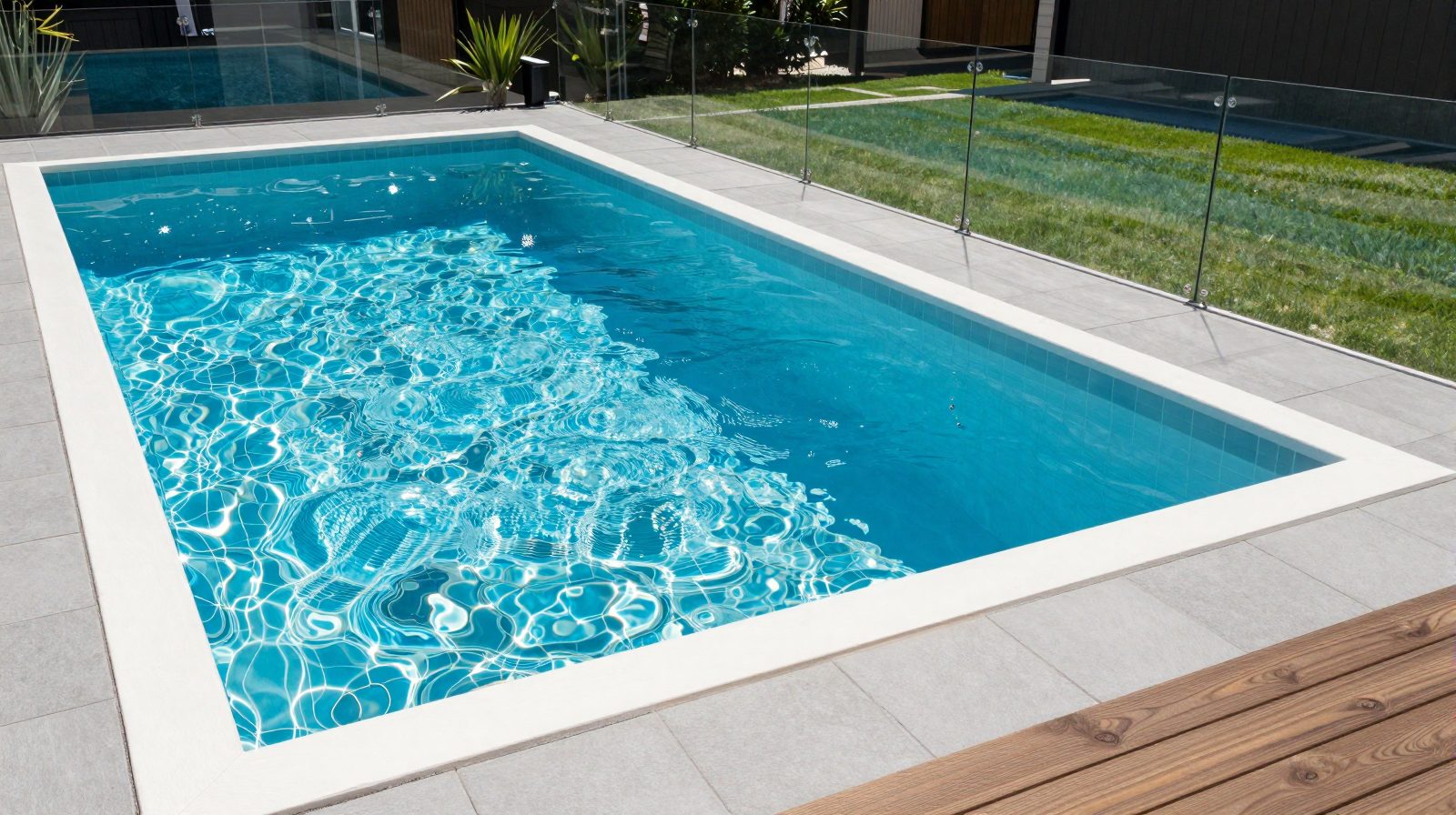
Illustration.
In NSW, a backyard pool must be surrounded by a child-resistant barrier under the Swimming Pools Act 1992, built to the Australian Standard for pool barriers, AS 1926.1. Councils publish self-assessment checklists so owners can check their own fence. Here are the requirements from one of those checklists, with what each means when you walk around your pool with a tape measure.
This is a checking guide, not a certificate. Whether a particular barrier complies depends on its age, its approval and the standard that applied when it was built, and only a council or an accredited certifier can issue a compliance certificate.
The fence and gate, measured
| # | Requirement | How to check it |
|---|---|---|
| 1 | Fence at least 1200 mm high all the way around, measured on the outside | Measure from the ground outside the fence to the top, at the lowest points, including where the ground rises |
| 2 | A boundary fence forming part of the pool barrier: at least 1800 mm high on the pool side | Older approvals may differ; check the date your fence was approved |
| 3 | Gap under the fence: no more than 100 mm | Measure after rain or erosion; soil and mulch move |
| 4 | Vertical rails less than 100 mm apart | Check every panel and the gate |
| 5 | No hand or foot holds within 900 mm of the top of the fence, in any direction | The "non-climbable zone": horizontal rails, plants, pots and furniture count |
| 6 | No hand or foot holds within 300 mm inside the fence | Check the pool side too |
| 7 | Mesh or perforated fencing: holes no more than 13 mm | |
| 8 | Fence in good repair | No holes, broken rails or rust |
| 9 | Gate is self-closing and self-latching from any position | Open it fully, let go: it must swing shut and latch. Repeat from half open and from resting on the latch |
| 10 | Latch secure, cannot be opened without releasing it | Push and pull a latched gate |
| 11 | Gate opens outwards, away from the pool | |
| 12 | Latch release at least 1500 mm above the ground, or inside the fence at least 150 mm below the top and shielded | Measure to the release, not the gate top |
| 13 | A wall that forms part of the barrier: no openings over 100 mm | |
| 14 | Windows facing the pool area: open no more than 100 mm, or are fully covered by bars or secure mesh | Check every window into the pool area |
| 15 | A warning sign with CPR instructions near the pool, readable from 3 m, covering adults and children | Replace faded signs |
| 16 | The fence is clear of objects a child could climb | BBQs, trees, rocks, shrubs, toys, pool equipment, furniture |
The non-climbable zone, in practice
Item 5 is the one most backyards fail without anyone noticing. A pot plant moved against the fence, a garden bed that has grown, a chair left beside the gate or a filter housing installed next to the fence all create a foothold. Walk the outside of the fence and look for anything within 900 mm of the top, in any direction, that a small child could stand on or grip.
Older pools
Pools built before 1 September 2008 on large, small or waterfront properties could, in some cases, rely on locked doors and restricted windows instead of a full fence. The checklist sets out those older alternatives: door latches at least 1500 mm above the floor, no pet doors or openings over 100 mm into the pool area, and windows restricted or screened. If your pool is in this group, ask your council what applies to it before you change anything, and especially before selling or leasing.
Registration and certificates
Every NSW pool and spa must be on the NSW Swimming Pool Register, which is free. For a sale or lease, registration is separate from the required certificate documents. A relevant recent occupation certificate can also be accepted; a sale may use a non-compliance certificate in specified circumstances. Ask your conveyancer or agent which documents apply. A compliance certificate generally lasts three years while the barrier remains compliant. Councils and accredited certifiers carry out the inspections, and councils also run barrier inspection programs.
The measurements above summarise a council checklist; barrier configurations, mesh dimensions, latch shielding and window exceptions require the correct standard for the pool. The gap below the barrier and the spacing between vertical rails are separate tests. Do not use the table to approve a new installation yourself.
The rule behind every rule
Fences slow children down; they do not replace supervision. Keep the gate shut, never prop it open, keep the climb zone clear, and learn CPR.